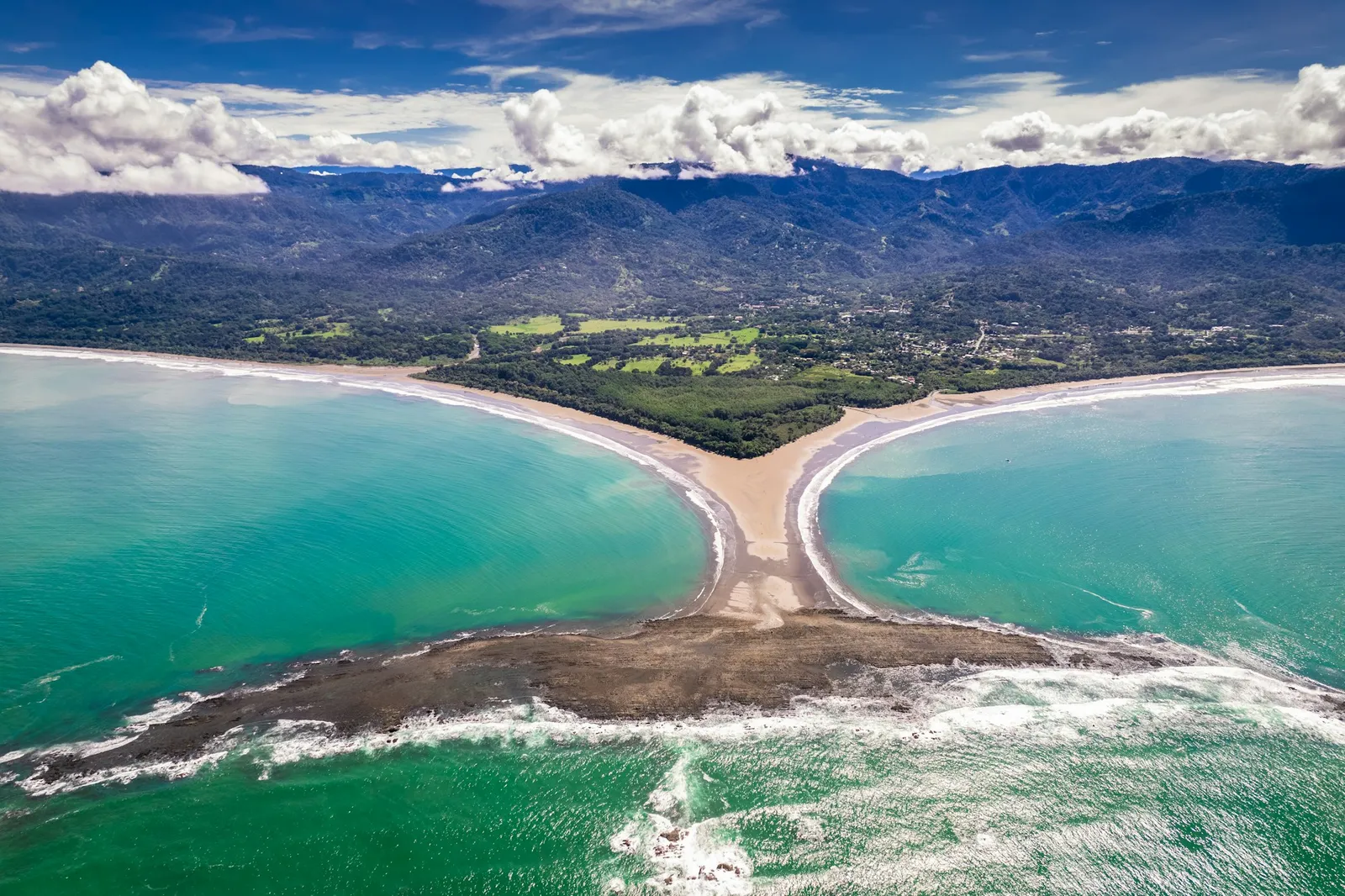
Uvita, Costa Rica is a laid-back beach town on the South Pacific coast built around one very photogenic quirk: at low tide, a sandbar reaches out from the shore in the exact shape of a humpback whale’s tail. That Whale Tail sits inside Marino Ballena National Park, and it is the reason most people put Uvita on the map at all. But the town is worth more than one aerial photo, and the honest pitch is that it is a quieter, less-polished base for whale watching, cheap waterfalls, and jungle-backed beaches, if you are willing to drive.
The catch to lead with, because it shapes the whole trip: Uvita is a sprawling community, and most places to stay are not walkable to the beach or to town. You will want a rental car here. Once you accept that, it opens up. Here is what is actually good, what it costs, and when to come.
The Whale Tail and Marino Ballena National Park
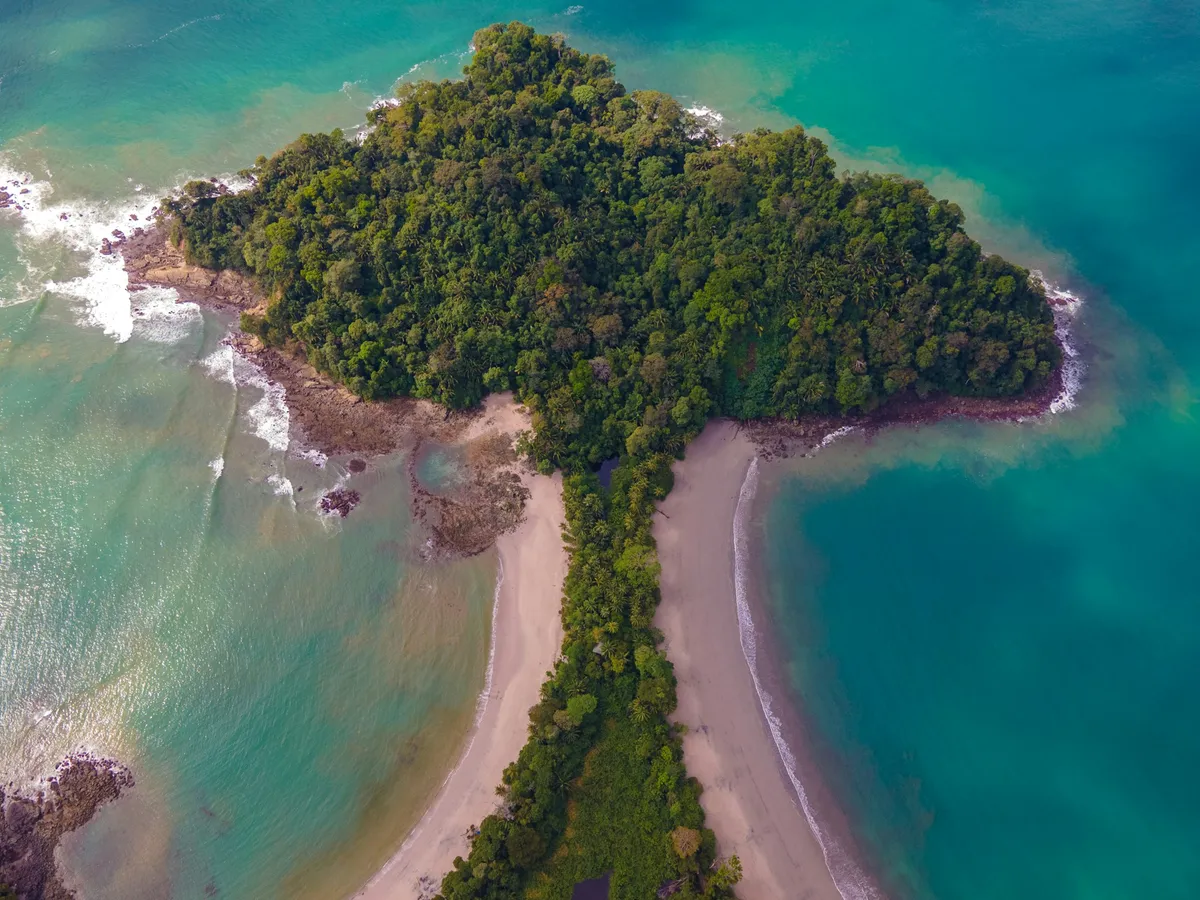
Marino Ballena National Park protects about 110 hectares of land and a much larger 5,510 hectares of ocean, and it is anchored by the Whale Tail, the sandbar that forms the shape of a tail when the water pulls back at low tide. This is the single most important planning detail in Uvita: the Whale Tail is tide-dependent. At high tide it is underwater and there is nothing to see or walk. Check a tide chart before you go and time your visit for low tide, ideally the couple of hours around it, so you can actually walk out along the sandbar toward the point.
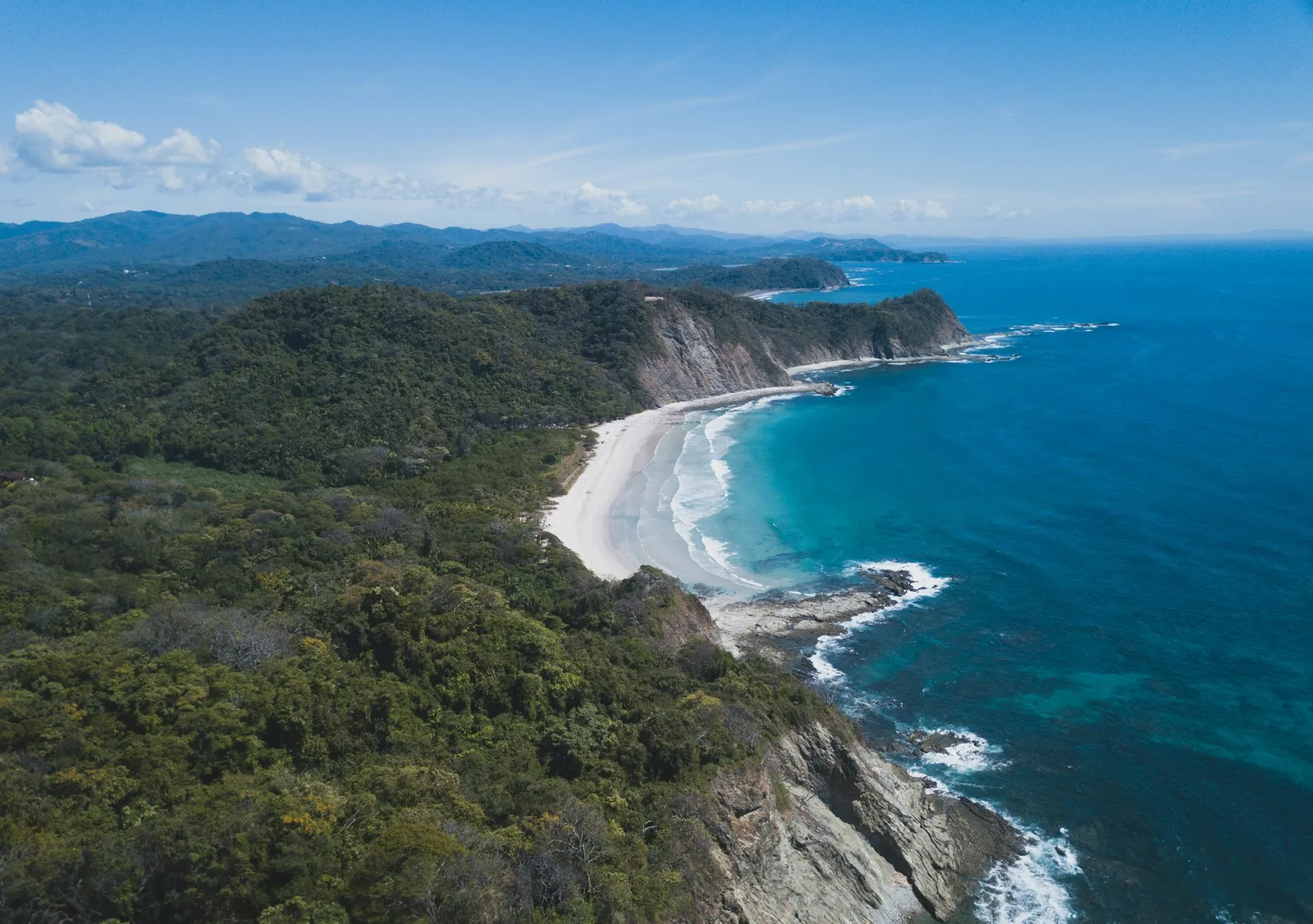
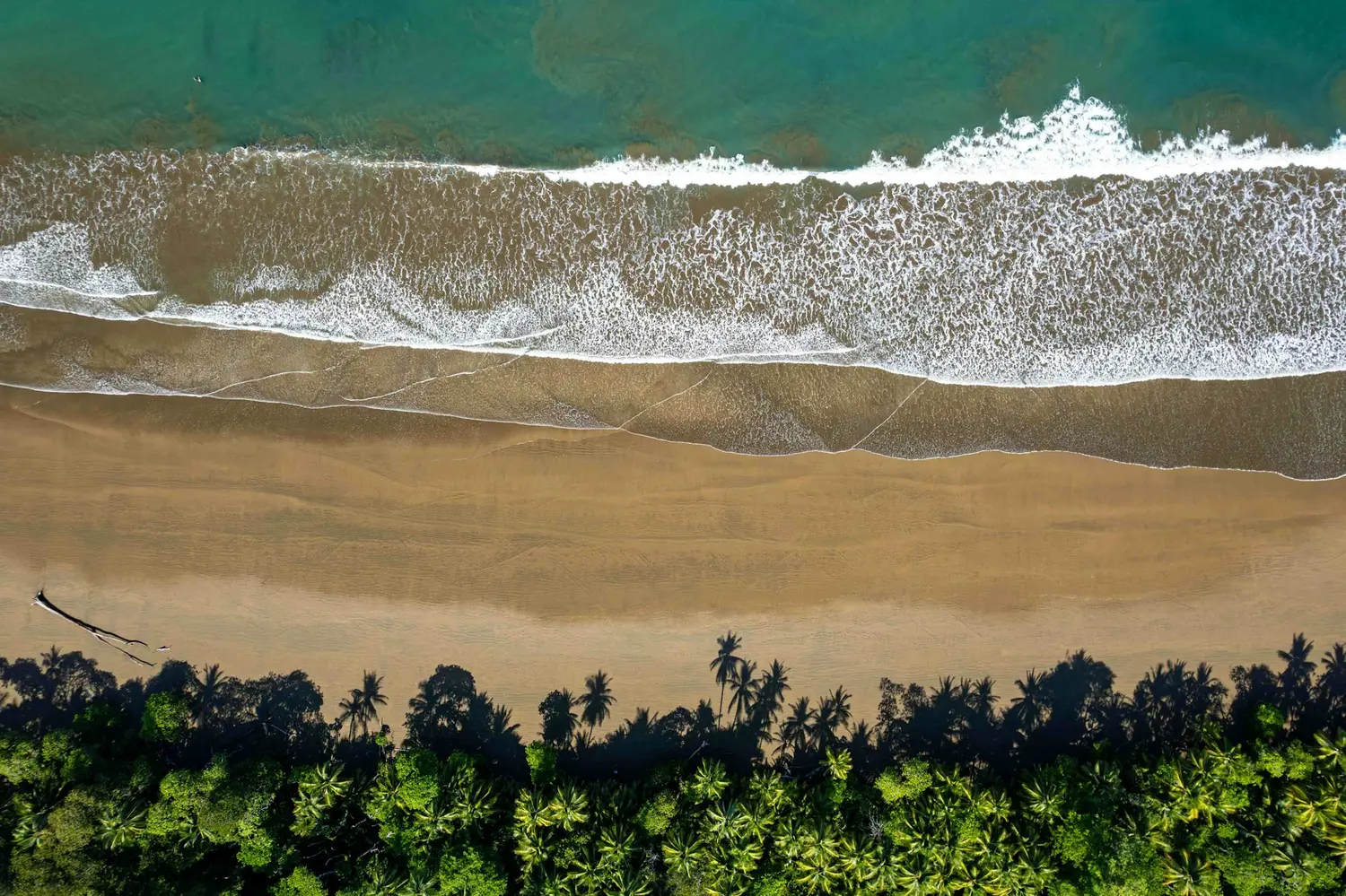
The park entrance fee is $6 for foreign visitors, which is one of the cheapest national park fees in Costa Rica and a genuine bargain for what you get. Beyond the Whale Tail itself, the park stretches across several beaches, including Playa Uvita, Playa Ballena, Playa Arco, and Playa Hermosa, all soft golden sand with calm, swimmable water. Playa Uvita is the main access point and the closest to the sandbar. It is an easy, flat walk from the entrance to the beach, so this is a low-effort attraction that pays off well, as long as you get the tide right.
Whale Watching: Two Seasons, Not One
Uvita’s other claim is one of the best whale-watching windows on the planet, because the coast gets two separate humpback migrations rather than one. Whales from the North Pacific arrive roughly July through October, and whales from the Southern Hemisphere come through roughly December through April. Between the two, Uvita has an unusually long stretch of the year when you have a real shot at seeing humpbacks breaching and tail-slapping offshore.
Boat tours run about $140 per adult and typically last a few hours, heading out into the protected waters of the park where the whales gather. If you are here in one of those windows, it is the signature experience and worth the money. The same operators often run trips out to Caño Island for snorkeling, also around $140 per adult, which is one of the best snorkeling spots on this coast if you want to add a day of it.
If seeing whales is a must-do for you, plan your dates around one of those two seasons rather than assuming any time will work. The late-July-into-September stretch, overlapping with the northern migration, is the most reliable, and it is also when the town leans into its annual whale-focused festival, so the timing works out.
The Waterfalls: Two Very Different Options
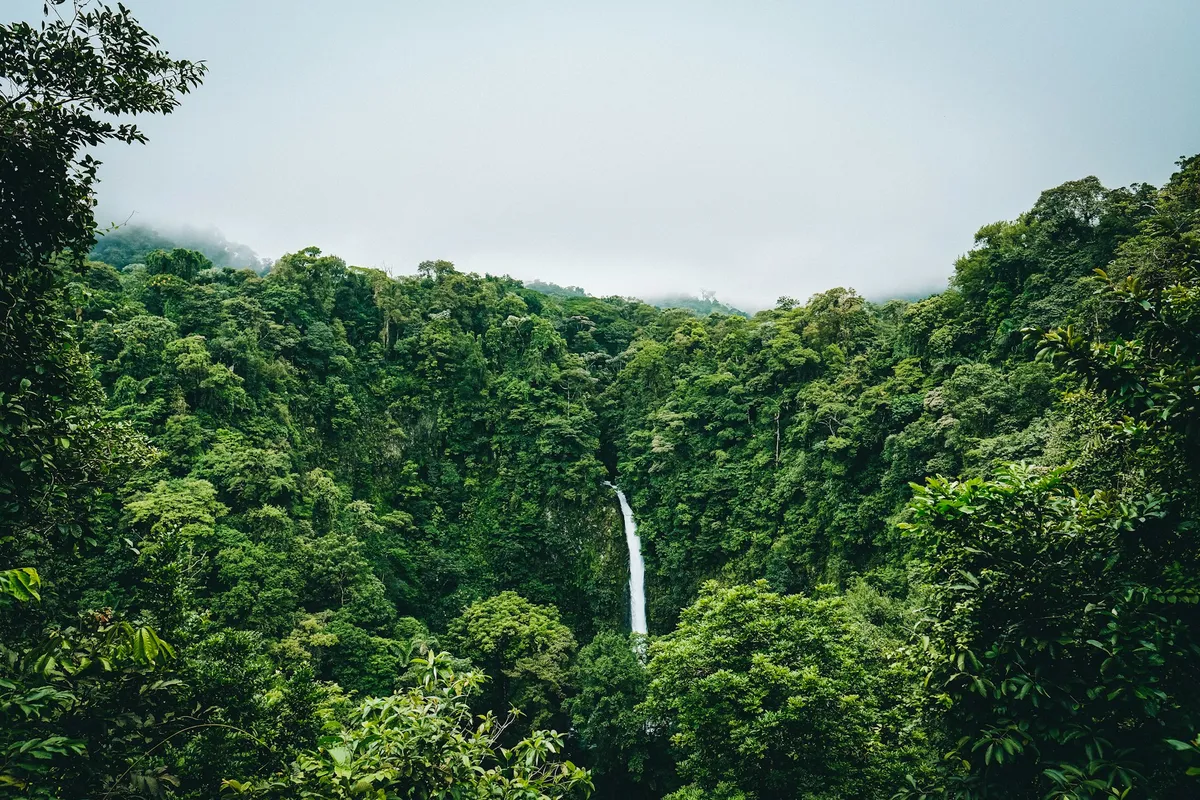
Uvita is a waterfall base as much as a beach town, and there are two you should know about because they ask completely different things of you.
The Uvita Waterfall, also called Cascada El Pavón, is the easy, cheap, fun one. It is roughly a ten-minute drive from the park and famous for a natural rock slide that locals and travelers both use, sliding down worn stone into the pool below. There are two entrances at different prices: the first runs about 2,000 colones and includes a butterfly garden, parking, and a flat, easy path, while the second is around 1,500 colones with a steeper walk and no parking. Go through the first entrance unless you are counting every colon. This is the low-commitment waterfall you can do in an hour or two, and it is a genuine highlight for families and anyone who does not want a hike.
The Nauyaca Waterfalls are the bigger, more dramatic, more effortful option. This is a two-tiered falls with an upper cascade around 40 meters and a lower one around 20 meters, set deep in the rainforest. Getting in costs about $12 booked online or $10 on-site, and the falls sit roughly 4 kilometers from the parking area, about an hour on foot along a rough road. If you do not want to walk it, you have two common alternatives: a horseback ride for around $80, or a 4WD shuttle tour for around $32 that drives you most of the way. Nauyaca is the more photogenic of the two and worth the effort, but budget half a day and pick your access method based on how much walking you want to do in the heat.
Getting There, and Why You Need a Car
Uvita sits on the Costanera Sur, the coastal highway that runs down the South Pacific, and getting there is a scenic drive rather than a quick hop. From San José or the SJO airport, plan on roughly three and a half to four and a half hours: you head west on the Autopista del Sol, the Caldera Highway, then pick up the Costanera Sur after the Pavón toll, pass Jacó, and follow the coast south until you reach town. The drive itself is a highlight, with ocean views for long stretches, so build in time and a couple of stops rather than treating it as pure transit.
Once you arrive, the car keeps earning its keep. Uvita is spread out, the beach and the waterfalls and the restaurants are not clustered, and most lodging is not within walking distance of any of it. Taxis exist for short hops, roughly 3,000 to 4,000 colones to the Uvita Waterfall or 4,000 to 5,000 to Playa Arco, and about 12,000 colones each way to nearby Dominical, but leaning on taxis for a multi-day trip adds up fast and limits you. A rental car is close to essential here in a way it is not in a compact walkable town. If you are landing in San José and driving down, sort the rental out of San José before you leave the airport.
When to Go
The season tradeoff is the classic Pacific one, with a whale overlay on top.
- Dry season, December to April, brings daytime temperatures around 80 to 95°F and minimal rain, which is ideal for the beach, snorkeling, and every water activity. It also overlaps the southern-hemisphere whale window, so you can pair reliable sun with a real shot at whales. This is peak season, so expect the highest prices and the most people.
- The green season, May to November, is cooler at around 75 to 85°F, lusher, and cheaper, with the heaviest rain in September and October. The rain here often falls overnight or in the late afternoon, so mornings and early afternoons are frequently dry enough to get out and explore.
- The shoulder window of May and June, sometimes called the secret season, is the quiet value play: mostly dry days, noticeably lower prices, and thin crowds before the wetter months arrive.
If you want guaranteed sun and southern whales, come in the dry season. If you want the northern whale migration at its most reliable, aim for the July-to-October window and accept some afternoon rain. If you mostly want value and calm, May and June are hard to beat.
What Else Is Around
Uvita works well as a base for the wider South Pacific. Dominical, about 19 kilometers north, is the region’s surf town and an easy day trip for a different beach and a livelier bar scene, while Ojochal to the south has built a surprising reputation as a foodie enclave. Inland, the Alturas Wildlife Sanctuary runs guided tours for around $25 for adults and $15 for kids, Tuesday through Sunday at set morning and early-afternoon times, and it is a solid rainy-morning or wildlife-focused option.
The town itself is deliberately low-key. There is a small but real dining scene, from casual spots like the Whale Tail Brewery to farm-to-table dinners, and the overall feel is relaxation and nature rather than nightlife. That is the point of Uvita, and it is why people who want a quieter, more grounded stretch of coast choose it over the busier beach towns.
The Honest Verdict
Uvita is a low-key, spread-out base for some genuinely great, genuinely affordable nature: the Whale Tail sandbar and a $6 national park, two humpback seasons instead of one, and a pair of waterfalls that cover both the easy-rock-slide crowd and the deep-jungle-hike crowd. The tradeoffs are that you need a car, the town is not walkable, and the Whale Tail only appears at low tide, so a little planning is the difference between a great trip and a flat one.
Give it three or four nights, rent a car and drive the scenic Costanera down, time your beach visit around low tide, and pick your season around whether whales or pure sun matters more. Do that, and Uvita rewards you with the kind of coast that still feels like it belongs to Costa Rica rather than to a resort brochure. If you need walkable town life and nightlife on your doorstep, this is not your town, and that is worth knowing before you commit to the drive.