Here is the single most useful fact about Puerto Viejo, and most Costa Rica guides bury it: the seasons on this coast run opposite to the rest of the country. September and October, the wettest, cheapest, most avoided months on the Pacific side, are the driest and sunniest of the year here. Locals call them the Caribbean summer. If your only possible travel window is late September, Puerto Viejo is not your compromise. It is your best option in the country.
That inversion shapes everything else about planning this trip, so this guide covers it properly: when to actually come, what the town and its beaches are like, how to get here from San Jose, and where to stay along the 13 km of coast between town and Manzanillo.
What Puerto Viejo Actually Is, and Who It Suits
Puerto Viejo de Talamanca sits on the southern Caribbean coast, about 50 km from the Panama border. It is not a resort town and there is nothing all-inclusive about it. The culture is Afro-Caribbean, with rice and beans cooked in coconut milk, reggae and calypso instead of mariachi playlists, and the indigenous Bribri communities in the hills behind town. English has deep roots here; the town was called Old Harbour before the government hispanicized the names. It feels closer to Jamaica than to Tamarindo.
One warning before you book anything: there are two Puerto Viejos in Costa Rica. The other one, Puerto Viejo de Sarapiqui, is a river town in the northern lowlands, and buses to both can display the same destination sign. You want Puerto Viejo de Talamanca, Limon province.
Who it suits: travelers who want beaches with personality, are happy on a bicycle, and care about food and culture as much as wildlife. Who should skip it: anyone who wants resort infrastructure, guaranteed calm swimming at every beach, or a short transfer, because it is the far side of the country from Guanacaste. If your trip is built around the Pacific-coast pattern of resorts and dry-season certainty, our Costa Rica beaches guide covers that side.
When to Go: The Caribbean Exception, In Plain Numbers
The Pacific rule you have read everywhere, dry December through April and wet May through November, does not apply here. The Caribbean coast gets rain spread across the whole year, with two drier windows: February to March and September to October. Multiple sources that track this coast month by month agree that September and October are the driest, sunniest stretch, exactly when the Pacific is at its wettest. The wettest months here tend to be June, November, and December.
What that means in practice:
- September and October bring the calmest, clearest sea of the year. This is the snorkeling window, when travelers report seeing reef fish and turtles off Punta Uva on flat days. Prices are green-season low because the rest of the country is slow.
- February and March overlap with Pacific high season, so this is the busier, pricier of the two dry windows.
- December and January are peak crowds nationally but genuinely rainy here. A Christmas trip split between this coast and the Pacific will get better weather on the Pacific half.
It still rains in the dry windows; this is rainforest coast, and no month is guaranteed dry. But if you are choosing where in Costa Rica to spend a September or October week, this coast wins on the numbers, not on wishful thinking.
The Beaches: 13 km from Salsa Brava to Manzanillo
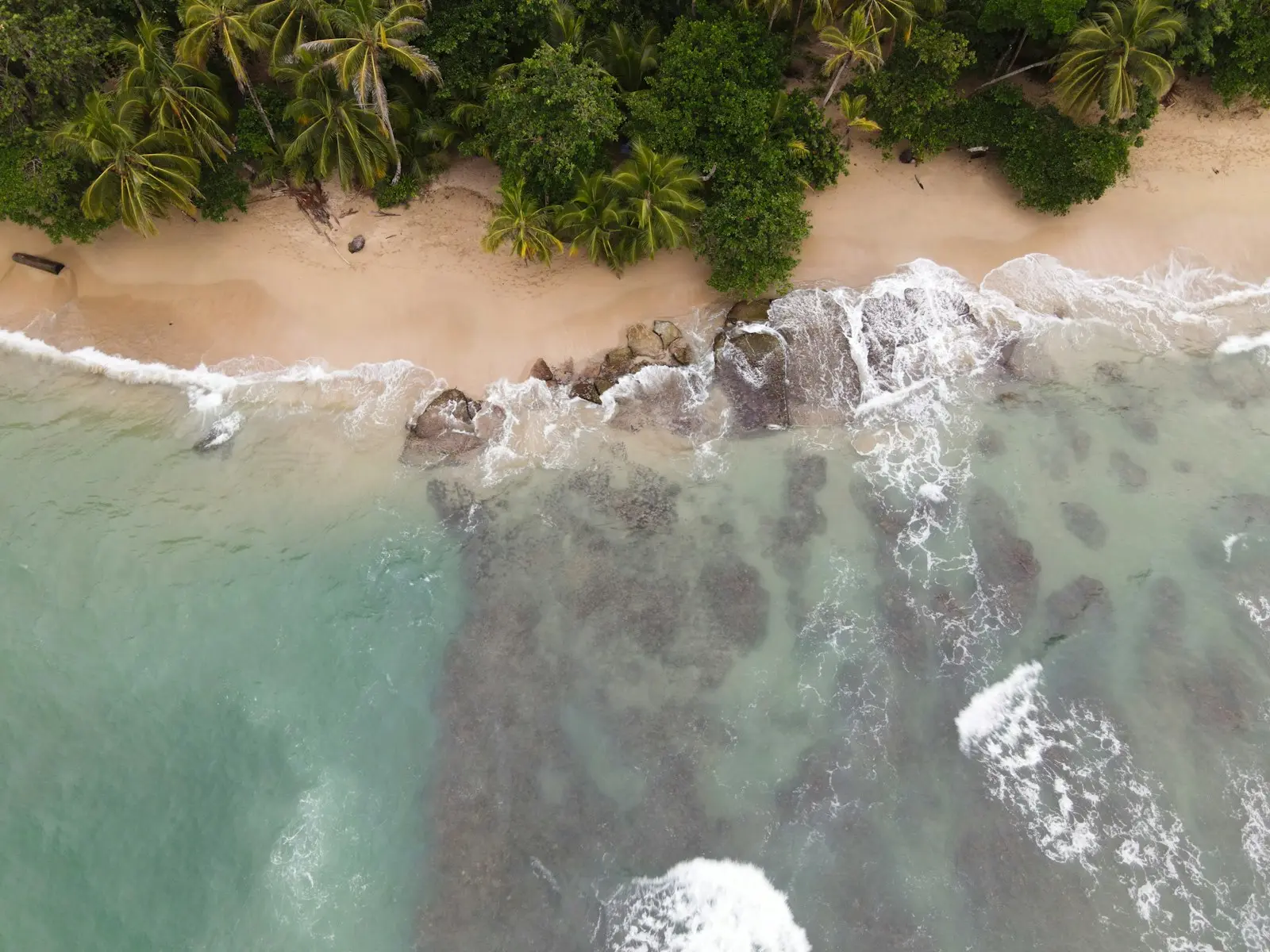
The beaches are strung along one flat coastal road running southeast from town, and each has a distinct job.
- Playa Negra, just north of town, is black sand with some calm swimming spots, and usually the quietest option within walking distance.
- Salsa Brava breaks right off town over a shallow reef. It is Costa Rica’s most powerful wave and it is for experienced surfers only. Watch it with a drink from the shoreline; do not learn on it.
- Playa Cocles, 2 km out, is the surf-lesson beach, a sandy beach break with schools and board rentals. Currents are real here, so swim near the lifeguard flags when they are up.
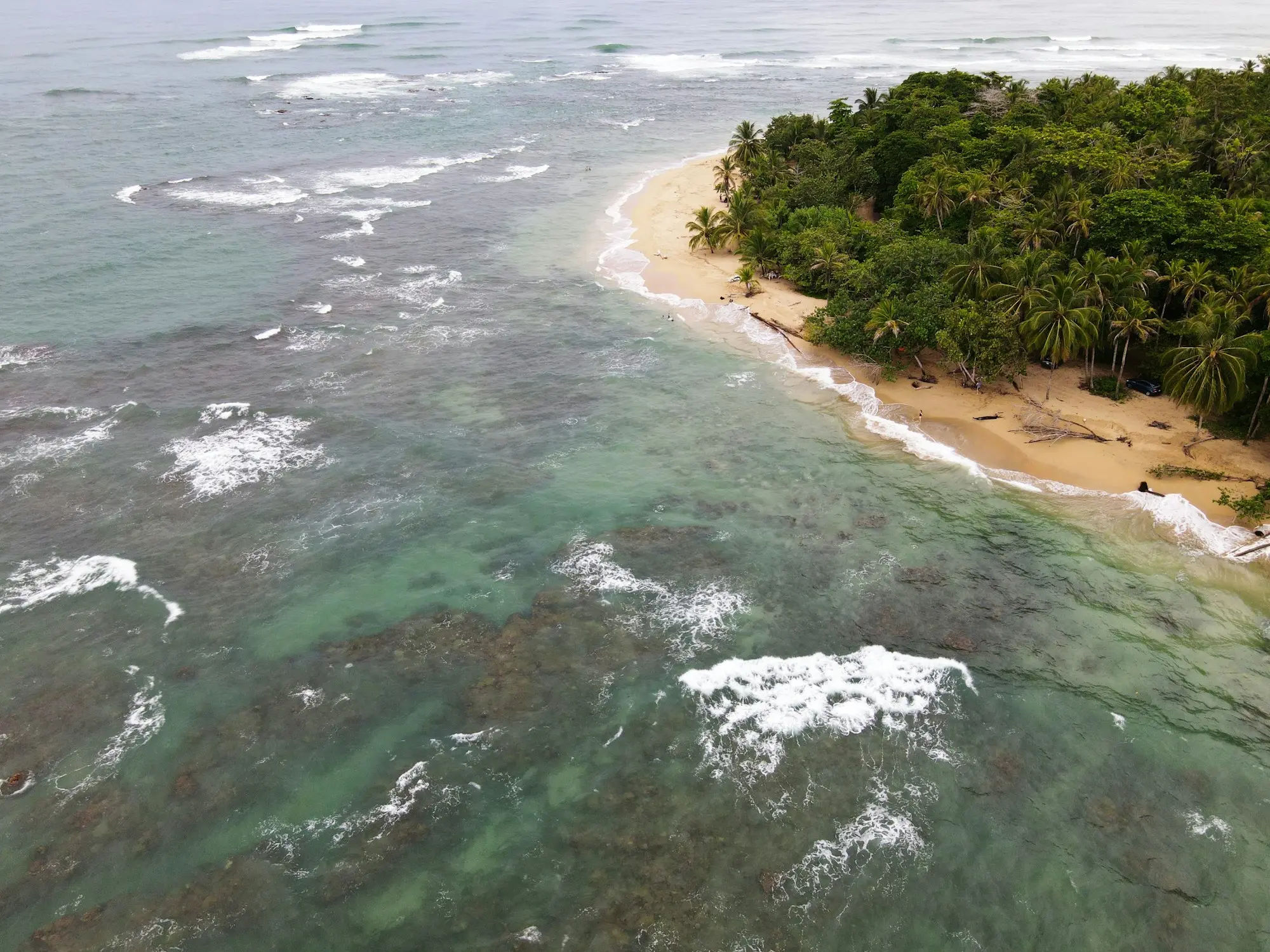
- Playa Chiquita and Punta Uva, 4 to 8 km out, are the postcard beaches: ivory sand, calm coves, tall palms. Punta Uva is widely rated the best swimming beach on this coast, and at Punta Uva Arrecife you can snorkel straight off the sand on a calm day.
- Manzanillo, 13 km out, ends the road at a fishing village inside the Gandoca-Manzanillo Wildlife Refuge, which is free to enter and good for kayaking and coastal hiking.
The transport for all of this is a bicycle. Rentals run about $6 for 24 hours from most hotels and hostels, the road is flat, and on busy days there are more bikes than cars on it. A tuk-tuk to Punta Uva runs about 5,000 colones, roughly $10, if you do not feel like pedaling back.
Beyond the Beach: The Jaguar Rescue Center and Cahuita
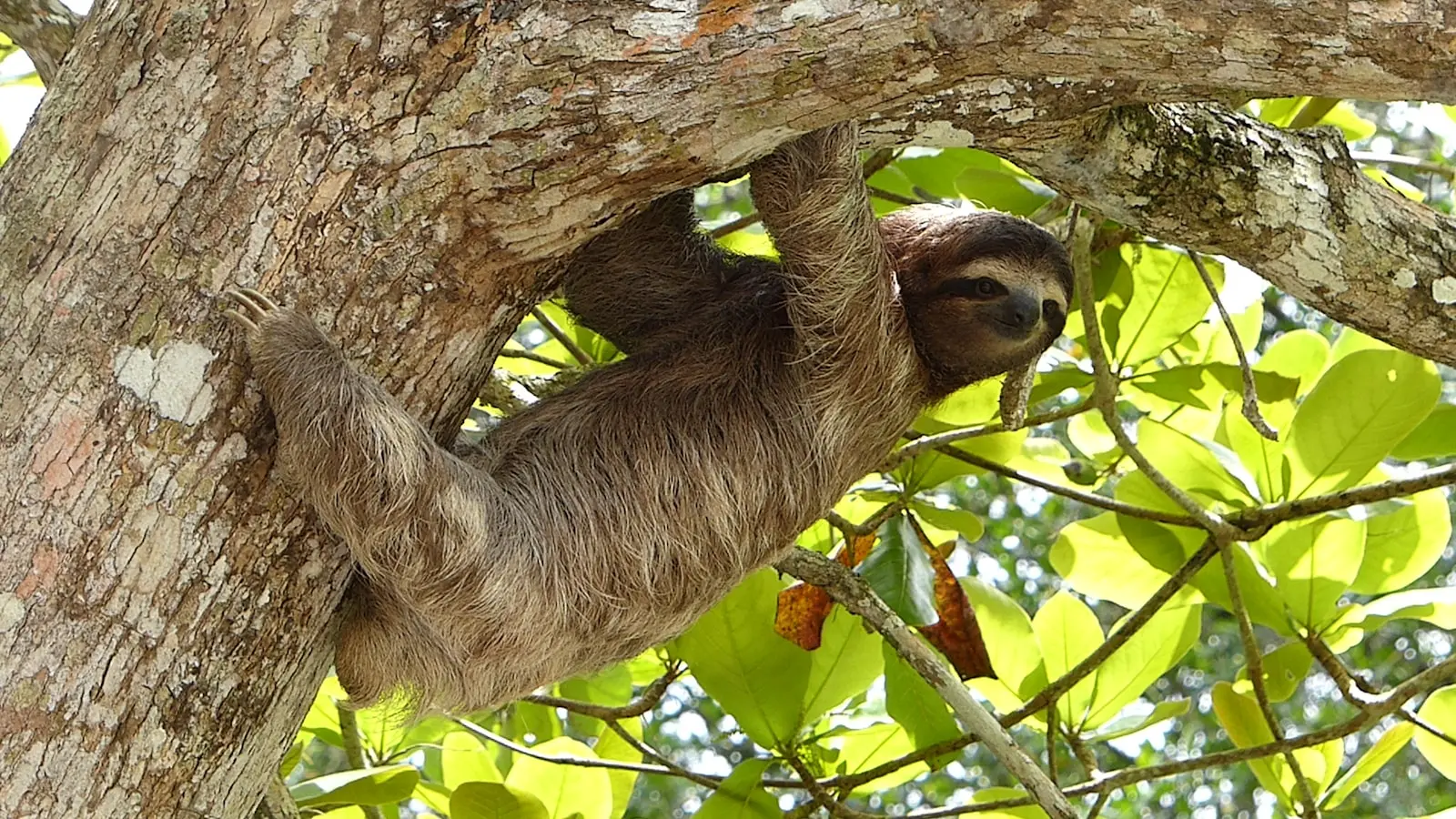
Two outings earn a slot on almost every itinerary here.
The Jaguar Rescue Center at Playa Chiquita is a wildlife rehabilitation facility, not a zoo, and the 90-minute public tours explain exactly how animals come in and go back out. Tours run at 9:30 and 11:30 am, Monday through Saturday, at $25 per person with kids under 10 free, based on the center’s published 2025 pricing; some listings show $27, so confirm when booking. Book online ahead in high season.
Cahuita National Park, a 30-minute drive or short bus ride north, protects beach, rainforest, and Costa Rica’s largest coral reef, and it is the rare national park with donation-based entry at the Kelly Creek entrance in Cahuita village; the Puerto Vargas entrance charges about $5. The flat coastal trail delivers sloths and monkeys at a density that rivals parks charging four times as much. If you are comparing it to the famous Pacific park, our Manuel Antonio National Park guide makes the contrast obvious: Cahuita trades boardwalks and crowds for a longer, quieter walk.
The food is a real reason to pick this coast, and it is easy to miss if you default to the pizza and smoothie-bowl places on the main strip. The dishes to order are the Caribbean ones: rice and beans simmered in coconut milk, whole fried snapper, rondon, the coconut seafood stew that needs to be ordered hours ahead at some kitchens, and pati, the spiced meat pastry sold from bakeries and roadside stands for pocket change. The small family-run sodas a street or two off the beachfront charge local prices; the beachfront charges tourist prices for the same plate.
The other food stop worth planning is chocolate. The Talamanca hills behind town grow serious cacao, and several farms between Playa Chiquita and the Bribri territory run tours with tastings. If you have a free rainy afternoon, this is the classic use for it.
Getting There: Shuttle, Bus, or Drive
Puerto Viejo is 4.5 to 5 hours from San Jose however you do it, so plan it as a travel day.
Shared shuttle is the comfortable default. Caribe Shuttle runs twice daily, 5:30 am and 2 pm, at $60 plus tax, with a $7 supplement for Punta Uva or Manzanillo drop-offs. Interbus runs 7:30 am and 1:30 pm at $61 plus tax. Both are door to door and both sell out, so book at least a couple of days ahead. Confirm current schedules before booking; departure times shift.
The public bus is the honest budget play. Transportes MEPE runs six daily departures from its San Jose terminal in Barrio Mexico for 6,975 colones, about $14, taking around 4.5 hours with assigned seats. Buy tickets ahead on weekends. As of mid-2026, roadwork on Highway 32 can add up to an hour, so pad your arrival.
Driving yourself takes about the same 4.5 to 5 hours, and Highway 32 through Braulio Carrillo National Park is the one caveat: it closes intermittently for landslides and fog, so check conditions the morning you go. You genuinely do not need a car once you are here, the bike covers everything, so weigh whether the rental just sits parked. If you do rent, remember the mandatory third-party liability insurance, the Tarifa Basica or TPL, at roughly $15 a day. It cannot be declined and credit card coverage does not replace it. Our San Jose car rental guide has the full breakdown.
Where to Stay: Town vs the Beach Road
The choice is simple once you know the layout. Town is walkable, has the nightlife and the cheapest hostel beds, and puts every restaurant within five minutes. It is also the noisiest option on weekends. The beach road, through Cocles, Chiquita, and Punta Uva, trades that for jungle quiet and proximity to the better swimming; as a reference point, well-reviewed cabin properties in Cocles list around $90 to 160 a night for two, and you will find both cheaper rooms and boutique places well above that. Rates drop noticeably outside the February to March window.
Three nights is the minimum that makes the long transfer worthwhile. Four or five lets the place do what it does best, which is slow you down to bicycle speed.